I Turned My Side Project Into a Tamagotchi. It Died Twice.
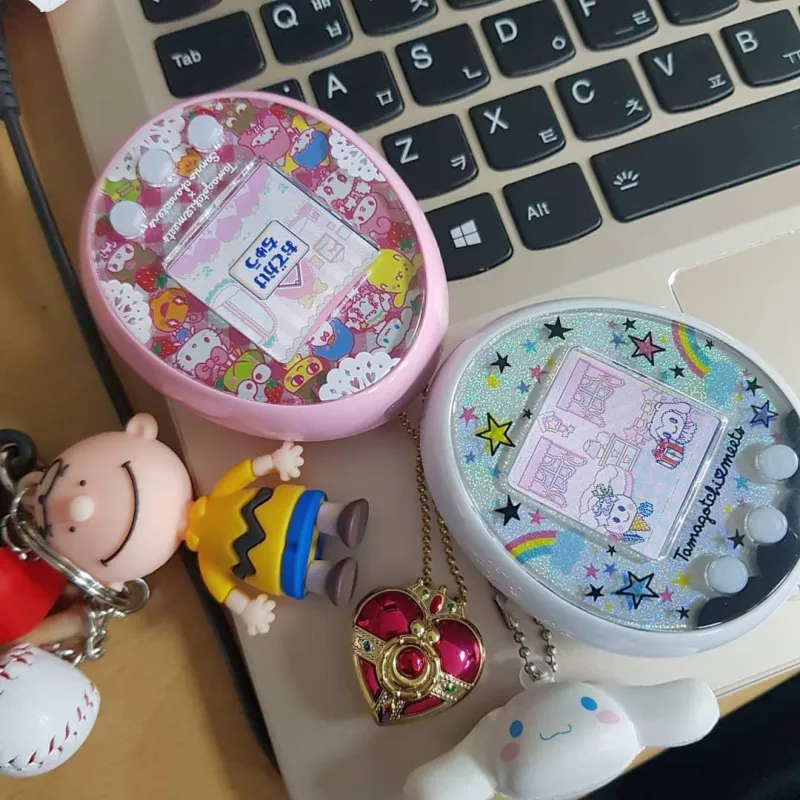
Photo: retro tamagotchi virtual pet toy on desk next to laptop, via i.pinimg.com
Somewhere around week three of maintaining my first open source project, I realized I was checking GitHub before I checked my email. Before coffee, some days. That's when I started calling it a Tamagotchi — the little keychain pet from the '90s that beeps at you when it's hungry. Except this one ran on issues, pull requests, and documentation debt instead of pixelated kibble.
The experiment was simple: I had a small CLI tool (a linter for markdown frontmatter, if you're curious) that I'd been using privately. Instead of letting it rot in a folder like most of my side projects, I would open source it and treat community maintenance as the project itself. Not the code. The care.
The Rules of the Pet
I gave myself three commitments, written on a sticky note next to my monitor:
- Every issue gets a response within 48 hours, even if the answer is "no."
- Every PR gets a review within a week, even if it's a one-line typo fix.
- Docs get touched every Sunday, no matter how minor.
Seems reasonable, right? Fifteen minutes a day, maybe an hour on weekends. That's what I told my wife, anyway. She's since framed that estimate as a family joke.
The Ledger Nobody Puts in the README
Six months in, here are the real numbers:
- Stars earned: 41. I know, big time. Forty-one people, somewhere out there, clicked a button.
- Hours spent: roughly 78. I tracked it in a spreadsheet because I'm the kind of person who tracks things in spreadsheets.
- Issues filed: 23. Eleven were bugs, six were feature requests, and six were people asking if it worked on Windows MSL. It did not. It still does not. Sorry, Windows folks.
- PRs merged: 9. Genuinely good contributions, several from people better at Rust than I'll ever be.
- PRs I had to gently decline: 4, including one that would have tripled the codebase to support YAML I didn't know could exist.
Do the math and that's just under two hours per star. If you told me I could buy a GitHub star for two hours of my life, I'd laugh. But the spreadsheet doesn't capture the weirdest part: I'd do it again.
The Feeding Schedule Gets Heavy
Here's what the Tamagotchi metaphor gets exactly right: the pet doesn't care about your schedule. It beeps when it beeps.
An issue would land at 9 p.m. on a Tuesday while I was watching a Rangers game, and my brain would do this thing where it refused to enjoy the third period because somewhere, a stranger was confused by my error messages. That's the emotional cost nobody warns you about. It's not the hours. It's the ambient guilt of a creature that's always, technically, slightly hungry.
And it died twice. Once in month two, when a breaking dependency update broke everyone's install and I went four days without noticing because I was on vacation in Moab with deliberately bad cell service. Came back to eleven angry issues. The other death was quieter — a stretch in month four where I just didn't touch it for three weeks and felt the community (all six of them) drifting away.
Both times, it came back. Pets are resilient like that. More resilient than my pride.
What the Community Actually Gives Back
The cynical read is: 78 hours for 41 stars, terrible ROI. But the ledger is missing entries.
A contributor in Portugal refactored my config parsing and taught me more about ownership in an afternoon than a tutorial ever had. A high schooler filed the most politely detailed bug report I've ever seen — I hired-adjacent recommended them for a local internship. And when my tool got mentioned in a newsletter (one mention, one), my personal site got more traffic in a day than in the previous year.
If you're building a portfolio, that's real currency. If you're building a product, it's a funnel. If you're building neither — if you just want a fun thing to poke at on weekends — it's a part-time job you don't get paid for.
The Verdict: Should You Adopt?
Here's my honest take, pet store owner to prospective pet owner:
Do it if: you want to level up in public, you genuinely enjoy code review as a social activity, or your project solves a problem you have, so maintenance pays you back directly.
Don't do it if: you're star-hunting, you're already stretched thin, or the thought of a stranger being mildly annoyed at you on a Tuesday night makes your chest tight. The chest-tightness is real and I will not be elaborating.
The middle path: open source it, but set the pet's feeding schedule to your life. Monthly maintenance windows. A CONTRIBUTING.md that says "response times are best-effort, this is a hobby." The 48-hour rule nearly broke me; a 7-day rule would have been fine and nobody would have noticed the difference.
My Tamagotchi is still alive, by the way. Slower heartbeat these days — an issue every couple weeks, a PR maybe monthly. I've downgraded from daily feedings to weekend ones, and the project didn't die. Turns out the pet was hardier than I thought. Turns out the fragile part was me.