Pocket-Sized Dev Lab: Thirty Days of Shipping From a Phone Screen
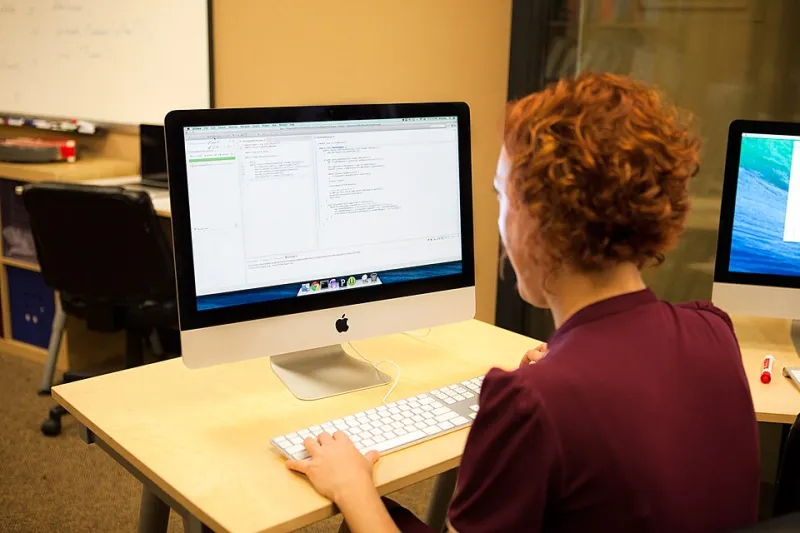
Photo: Joonspoon, CC BY-SA 4.0, via Wikimedia Commons
The drawer shut at 11:47 PM on a Tuesday. My laptop — a ThinkPad with a keyboard I've worn smooth over six years — went in, and I told myself it stays there until I've run my whole dev lab from my phone for a full month.
Why? Partly curiosity, partly a dare I made with myself after reading one too many hot takes about how the laptop is on its way out. Mostly because my side projects live on remote servers anyway, so the laptop is honestly just an expensive SSH client with a nice screen. If that's true, my phone should theoretically work. Theory and a bus queue, though, are different climates.
Here's the full teardown.
The Toolchain, In Full
I used a Pixel with a 6.1-inch screen, a folding Bluetooth keyboard I already owned, and a $12 phone stand that became the single most important piece of hardware in the experiment.
- Termux — the backbone. A real Linux-ish environment in my pocket, with SSH, git, and tmux. If you only install one thing, install this.
- tmux on the server — non-negotiable. Sessions persist no matter how aggressively Android kills my app while I'm between screens.
- VS Code Server running on my homelab box, accessed through the phone's browser. This was the sleeper hit.
- GitHub mobile app for PR reviews and issue triage.
- A physical keyboard for anything longer than a commit message.
Total new spend: $12. The rest was stuff already in a junk drawer, which feels on-brand for this site.
What Genuinely Worked
Code review in dead time. This is the part I didn't expect to love. Waiting rooms, checkout lines, the ten minutes before a friend shows up at a bar — I knocked out PR reviews in fragments I'd normally spend scrolling. GitHub's mobile app is legitimately good at this. Three-line review, tap approve, done. I cleared a 14-PR backlog in a week without ever sitting at a desk.
Deploys and hotfixes. Because everything runs through tmux, a deploy from the doctor's office is identical to a deploy from home. I fixed a broken cron job in a grocery store parking lot and felt like a warlock. Small fixes — a config typo, a dependency bump, a restart — are actually easier from the phone, because the phone is always with you and the friction to open it is near zero.
Monitoring. My status page, my server dashboards, my logs — all just browser tabs. The phone is arguably the best alert-response device ever made. Something breaks, I get a push notification, I ssh in, I poke around. Fine.
What Almost Broke Me
Writing new code. Let's not sugarcoat it. Reading code on a phone is fine. Writing code on a 6-inch screen is like painting a fence with a toothbrush. Even with the Bluetooth keyboard, the screen real estate is the killer — you can see either your editor or your terminal, rarely both, and the mental tax of holding the rest of the file in your head adds up fast. Day nine, I tried to refactor a 200-line module standing in line at a pharmacy and gave up halfway through, leaving a // TODO: finish this at a desk like a normal person comment.
The copy-paste tax. Moving text between the phone's clipboard, Termux, and the browser is a small tax paid dozens of times a day. Each one takes five seconds. Do the math on that over a month and it's hours.
The O'Hare incident. Week three, I'm at a gate in Chicago, my phone's SSH session drops mid-deploy, and re-establishing it through airport Wi-Fi's captive portal while a boarding group crowds around me was the closest I came to quitting. A laptop would have shrugged this off. The phone nearly didn't survive the encounter. I did not make my flight's boarding window with dignity intact.
Battery anxiety. A full day of SSH sessions, hotspots, and browser tabs leaves you at 15% by 4 PM, hunting for an outlet like it's a side quest.
The Verdict on the 'Laptop Is Dead' Crowd
They're wrong, but less wrong than I expected.
What the month actually proved is that the laptop has quietly become a role, not a requirement. Roughly 60% of my dev lab work — reviews, monitoring, small fixes, deploys, issue triage — runs perfectly from a phone. The remaining 40% is real writing and real debugging, and for that, a screen bigger than a paperback is a hard requirement, not a luxury.
So the honest framing isn't "phone replaces laptop." It's "phone absorbs the small stuff." After the experiment ended and I reclaimed my ThinkPad from the drawer, I noticed I was still doing PR reviews from the couch on my phone. Still checking dashboards from the passenger seat. The phone kept the 60%. It just stopped pretending it could do the other 40%.
Would I Recommend It?
Not as a lifestyle. But as a two-week audit? Absolutely. Lock the laptop up and find out which parts of your workflow genuinely need it. I'd bet you'll be surprised — and you'll come out with a Termux setup, a tmux config you actually trust, and a much sharper sense of what your desk is for.
The laptop came out of the drawer on day thirty-one. The $12 phone stand never left my nightstand.