The Doorbell I Built Has a Group Chat Now
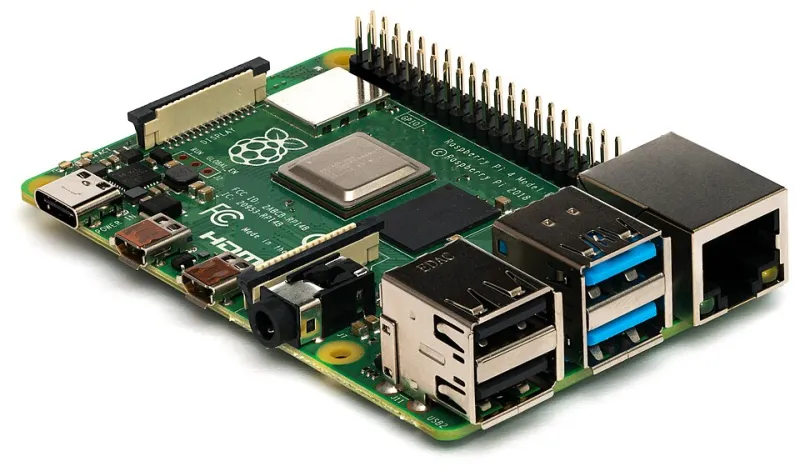
Photo: Laserlicht, CC BY-SA 4.0, via Wikimedia Commons
Every smart doorbell review I've ever read ends the same way: just buy a Ring. It's easier. It works. Stop overthinking it.
I disagree, and I've got a Raspberry Pi 4, a camera module, and a very confused neighborhood to prove it.
The Hardware, or: Why Is There a 1957 Intercom on My Porch
My house came with an old intercom system — the kind with a chunky pushbutton and a speaker grille that hasn't carried a voice since the Nixon administration. Ripping it out felt wasteful. Repurposing it felt like the whole project.
The build, for those following along at home:
- Raspberry Pi 4 (the 2GB model is plenty; don't let anyone upsell you)
- Camera Module 3 with a wide-angle lens, mounted where the intercom's speaker used to sit
- A doorbell button wired to a GPIO pin with a pull-up resistor, debounced in software because hardware bounce gave me a ghost ring every third press
- A PIR motion sensor tucked under the button housing
- A 12V to 5V buck converter so I could run everything off the existing doorbell transformer
The wiring took an afternoon. The debounce logic took an hour. Getting the camera angle right so it captured faces and not an artful shot of my own porch ceiling took three days and a ladder I now resent.
When someone presses the button, the Pi snaps a photo, fires off a webhook, and my phone buzzes with a notification and a live stream link. Total parts cost: about $85. No subscription. No cloud. No company quietly deciding my front door is a training dataset.
The Software Was Easy. The People Were Not.
Here's the part none of the DIY doorbell tutorials mention: the moment your neighbors find out you built a camera, you're in a different kind of engineering discipline.
My neighbor Doug — retired, curious, owns a leaf blower he deploys at 7 a.m. — asked if he could see the feed when his packages started vanishing off his porch. Then Maria across the street asked. Then it became a thing.
So I did something probably inadvisable: I stood up a simple web dashboard on my home network and shared access with four households on the block. Motion clips from the shared angle of the sidewalk, plus their own porch views where my camera reaches.
And then the group chat started.
What I Learned From Delegating My Doorbell
- People treat shared feeds like a neighborhood watch they didn't sign up for. I got a 40-message thread about a suspicious van that turned out to be the Amazon Flex driver. Twice.
- Retention policies are social policies. I set clips to auto-delete after 72 hours, and I'd argue that mattered more than any technical decision. Nobody wants their doorway archived forever by a guy with a Raspberry Pi.
- Field of view is a negotiation. My camera caught a sliver of Doug's driveway. He asked, politely, if I could angle it down. I did. That conversation took four minutes and resolved something that would've been a support ticket and a PR headache at any camera company.
The privacy tradeoffs of a DIY build are real, but they're legible. I know exactly where the footage lives (an SSD in my closet), who sees it (four households, opt-in, revocable), and when it deletes (72 hours). Try getting that clarity from a terms-of-service document.
Why Not Just Buy One?
Because the math is worse than it looks. A name-brand doorbell runs $150–250 upfront, then $40–60 a year to actually see the footage it records. Over five years you're north of $400 for a device that stops receiving updates when the manufacturer gets bored — and that uploads your front door to someone else's servers because it defaults to doing so.
My build cost $85 once. It runs on hardware I can repair, on software I can read, and if the company behind any of its components vanishes tomorrow, nothing about my doorbell stops working.
The honest downside: it took me two weekends, and my notification latency is about four seconds instead of instant. If you want plug-and-play, buy the commercial one. If you want to actually understand the thing bolted to your house, build it.
Next on the Bench
Doug has requested a second camera for his back fence. I told him I'd do it if he stops leaf-blowing before 8. Negotiations are ongoing.
The full wiring diagram, the debounce script, and the dashboard code are going up on the lab repo this week — including the retention cron job, which is the single most important file in the whole project. Your hardware doesn't make a doorbell trustworthy. What you do with the footage does.